
Green Indie Music Marketing Playbook for Africa's Next Breakout Artist
The Truth Nobody Tells You at the Upload Stage
You just recorded the song. You mixed it, mastered it, maybe even shot a video for it, and a decent video doesn't shoot for less than ₦5 million these days once you account for the director, the location, the crew, and the edit. Now you upload it, post the cover art, and wait. That waiting is the single most expensive mistake an emerging African artist can make.
Here's what actually moves a song forward, and it has nothing to do with which platform it's sitting on: momentum. Every meaningful placement, every wave of new listeners, every bit of buzz around a track starts from a trail of real people, real fans, talking about it, sharing it, pulling other people in behind them. Nothing "discovers" your music on its own. It follows the breadcrumbs that real listeners leave, and if you don't personally go out and create that trail, message by message, DM by DM, show by show, there is no trail to follow. Silence after upload doesn't just fail to help your song. It kills it.
Too many artists make the mistake of shouting into the void once and calling it promotion: one post the day the song drops, then nothing. That isn't a campaign, and it won't build a fanbase, generate income, or secure a future in this business. Promotion is not an event you do once at release. It's the daily, weekly, ongoing job of personally getting your music in front of the people most likely to pay for it, talk about it, and bring their friends along. You made the song. Now you have to sell it, in person and online, over and over, for as long as that song is alive.
That's the standard this playbook holds you to. And when it's time to talk about where that hustle should actually pay off, the destination has to change too. Instead of routing your hardest personal work toward global platforms that pay you in fractions of a cent from a foreign currency, route it toward Green Indie; Africa's first direct-to-fan platform, where fans pay you instantly, and you keep 90% of every sale.
And one more truth before we start: uploading the song is not the finish line. It's mile one. What follows, the plan below is the actual work.
The song is the starting line, not the finish line, the real work begins the moment it's uploaded.
1. Build a Home Base Fans Actually Own, Not a Rented Room on Someone Else's App
The big global streaming services aren't your house; you're a tenant, and the landlord changes the rent (their algorithm, their payout rate, their rules) whenever they want. If your fanbase is largely on the continent or in the diaspora sending money home, a platform that only accepts foreign cards is a wall, not a door.
What to do instead:
Set up your Green Indie storefront. Every artist gets one automatically: your own page, your own QR code, your own shareable link. Fans can pay with Opay, Palmpay, bank transfer, or card via Paystack, and the money lands in your account the moment they pay. No 60-day wait. No label cut.
Still claim your handle everywhere, Instagram, TikTok, X, WhatsApp Business, but point every one of those bios back to your Green Indie link. That's your one address. Everything else is a signpost pointing to it.
Keep a presence on the global streaming services for reach, not for income. They're still useful for algorithmic discovery and playlist placement; treat them as a billboard, not a bank account. The real transaction, the one that can pay your rent, happens on Green Indie, where you keep your masters and 90% of every sale, and where fans get a 15-second preview before they buy, so you're not giving the whole song away for free while a foreign platform pays you a fraction of a cent per stream.
This is also the moment to future-proof your paperwork. Green Indie is rolling out automatic ISRC/UPCs, local CMO registration, and international PRO filing (ASCAP, PRS, SOCAN); the boring infrastructure that determines whether radio play, TV placements, and diaspora streams actually turn into money in your account instead of vanishing into a system you're not registered with.
2. Build a World Around the Release, Then Sell Tickets Into That World
A release is more than putting a song out; it's an opportunity to build an entire visual and emotional world around it: cover art, press photos, social content, and a music video that should look and feel like a real production, not a phone clip shot in an afternoon. If you're spending ₦1 million or more to shoot it properly, that video needs to work as hard as the song does to bring fans back to one place where they can act.
Mood-board it, storyboard it, treat it like a real shoot. Know what your release looks like before you spend a single naira on production.
Then build a pre-release window on Green Indie before it hits the streaming services. This is the move most African artists skip entirely, because most global platforms don't even offer it. Sell the song directly to your most loyal fans days before wide release. You build urgency, you get paid before streaming dilutes the track's value with free plays, and you reward the fans who've been rocking with you, not strangers on an algorithm.
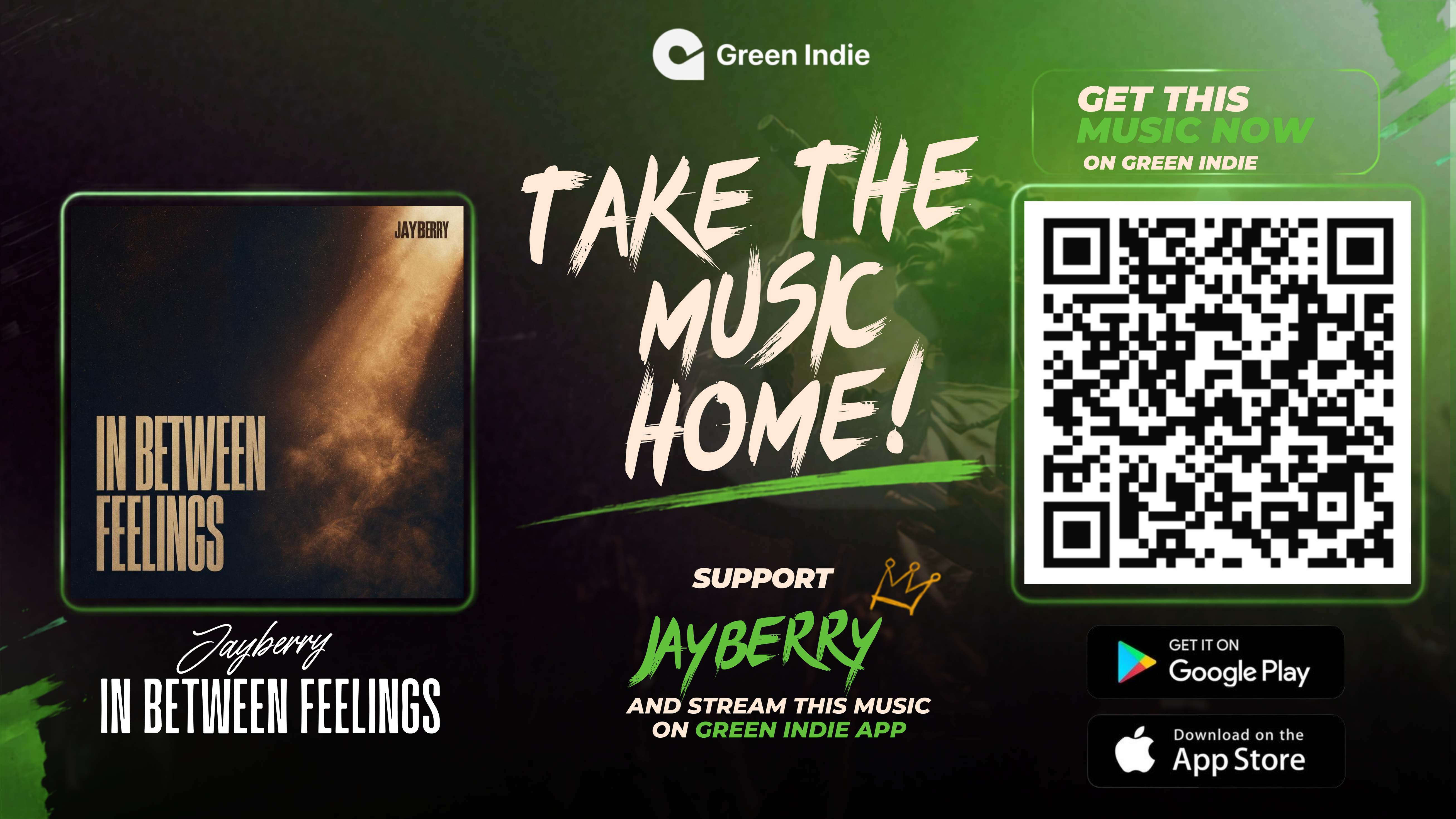
Use the QR code on everything: merch, event flyers, posters, even the video's end card. A fan who scans it lands directly on the page where they can buy the song right there, not just watch a video and scroll past.
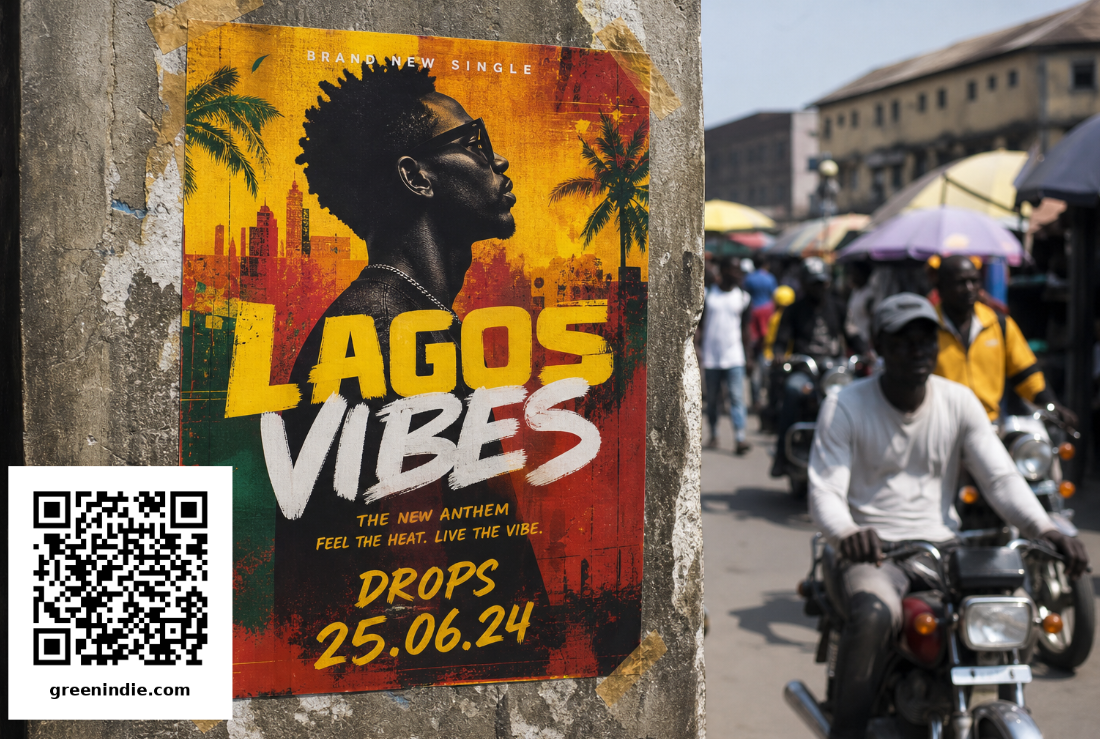
A QR code on a flyer, poster, or merch item turns a passer-by into an instant buyer, no app search, no friction.
3. Talk To Your Fans Like You Need Them, Because You Do
Short-form video, a consistent posting rhythm, more of your real life and less of your press kit, engagement over vanity follower counts, the fundamentals of content don't change by geography. What changes is the call to action at the end of every post.
Generic advice tells artists to drive fans "to stream." That's advice built for a market where streaming pays. In Nigeria, Ghana, and Kenya, where per-stream payouts are close to meaningless against the naira, cedi, or shilling you actually need, every piece of content should be doing one job on top of entertaining: driving fans to buy directly.
End captions and video hooks with a direct line to your Green Indie link — "link's on my page, go get the song before everyone else does."
Turn every comment, every DM, every share into a soft nudge toward the storefront, not just the play count.
Remember the platform's own numbers: a flat price, you keep 90%, fan pays instantly. That's the sentence your content should be building toward, over and over.
The whole point of every post is to get a fan's thumb from a phone screen to a "buy now" button, make that path one tap long.
4. Run Ads That Sell, Not Ads That Just Rack Up Plays
Start small; even a modest daily budget on Meta, TikTok, or YouTube can move the needle. What has to change for an African artist is what the ad is optimizing for.
If your ad drives to a stream on a global platform, you're paying real money to earn back fractions of a cent. That math never closes, and it definitely doesn't cover a ₦1 million video budget.
If your ad drives to your Green Indie storefront link, every naira spent on the ad has a direct shot at coming back as a naira (or more) in a fan's purchase, paid instantly via mobile money.
Make the ad feel native: lyric snippets, live clips, behind-the-scenes footage from that expensive shoot, but close the caption with "buy it now" or "get the full song," not "go stream it."
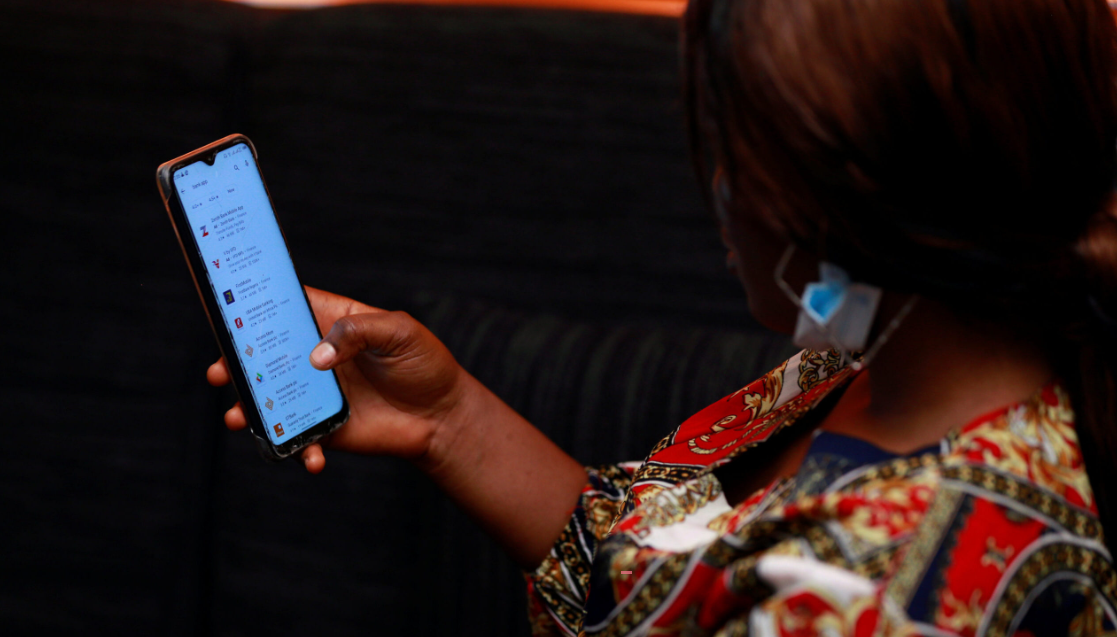
Opay, Palmpay, bank transfer, or card- the way your fans already pay is the way Green Indie collects for you, instantly, In addition to Apple Pay and Samsung Pay from your international patrons
5. Playlisting and Press Still Matter, Treat Them as Fuel for the Fire You're Actually Building
Pitching to curators and press is still worth doing; it puts your name in front of new ears. But don't confuse discovery with income. Every new listener that reach sends your way should land somewhere with a next step: your Green Indie storefront, where the QR code and link are waiting to turn a first-time listener into a paying fan.
Nollywood, Sync, and the Money Most Artists Never Chase
Here's a door that barely exists for an artist relying only on the global streaming services: Nollywood makes 2,500+ films and series a year, and Green Indie's licensing team is actively pitching artist catalogues to those productions, African streaming platforms (Showmax, Africa Magic, Prime Video Africa), and brand campaigns, sync placements reportedly worth ₦250,000 to ₦7.5 million plus, per deal, with the artist keeping their masters and approving every deal. That's not a hypothetical revenue stream sitting behind a stream count. It's a business built for exactly the catalogue you already have sitting on your phone, and it's the kind of return that can actually justify a ₦1 million video budget.
Every show, every stage, every crowd is another chance to personally sell the song, not just perform it.
The Call To Action That Actually Matters: Uploading Is the Beginning, Not the End
Read that heading again. This is the single biggest mistake emerging African artists make: they treat the upload as the achievement. It isn't. The song going live is the starting gun, not the finish line.
The work that actually determines whether that song, and that expensive video, makes you money is everything that happens after:
Tell people it exists. Repeatedly. On every platform, in every DM, at every show, on every poster. Silence after upload is the single fastest way to kill a good song and waste a ₦1 million production budget.
Give fans a reason to act now, not "someday." Pre-release windows, limited-time pricing, exclusive drops, urgency converts casual listeners into paying fans.
Make paying you the easiest thing a fan does all day. A QR code on a flyer. A link in a bio. Opay, Palmpay, bank transfer, or card, whatever a fan already has open on their phone, Green Indie takes it, and you get paid the second they do.
Follow up. The fans who bought your last single are your highest-probability buyers for the next one. Message them. Thank them. Tell them what's coming.
Repeat the cycle, a steady release schedule, roughly one single every six to eight weeks, because consistency, not a single viral moment, is what builds a career and a catalogue worth licensing to Nollywood five years from now.
You made the song. You spent real money on the video. Now go sell it directly, instantly, and on a platform built for how your fans actually pay.
Set up your storefront at greenindie.com. Upload your catalogue, get your QR code, and get the green.